Quick History of Education: Daily Inspire

Published: Mon, 07/23/12


Daily Inspire!
 

A Quick History of Education
 
 
Greece provides us with the history of two very different kinds of education, that of Athens versus Sparta.
 
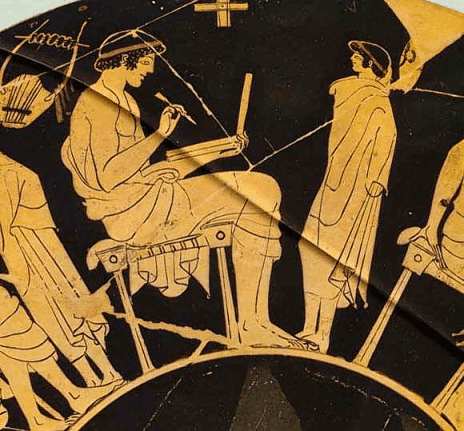
In Athens parents taught their kids directly until about age 7, when they were enrolled according to parental choice in various free enterprise schools and academies.
 
 
Anyone could set up a school, offer any curriculum, or do private tutoring. The parents researched various options and sent their children to different educational opportunities as they felt best.
 
Widespread competition kept the price low, since educational attainment was highly valued.
 
There was almost universal education for the young, even among the poorer classes. The wealthy typically hired tutors, while other classes usually sent children to group schools.

The broad curriculum included three major areas of focus: literacy, music and gymnastics. Literacy covered reading, writing and arithmetic, while the broad field of "music" included music, poetry, epic literature, drama and storytelling. Gymnastics emphasized physical fitness.  

During adolescence, typically between ages 14-18, the wealthy young continued studying with tutors while the non-wealthy youth were apprenticed into various trades. Parents made the choices about tutors and apprenticeships.
 
Adolescent studies of wealthy youth often covered oratory, science, higher mathematics, rhetorical writing, and a wide range of specialized topics--depending on the school.
 
The city-state of Sparta, in contrast, adopted a single state curriculum, required all children up to age 18 to attend, and allowed little or no extras beyond the compulsory curriculum.
 
The state appointed the teachers; parents had no say in the education of their youth.
 
At first blush, it would appear that the Spartan model was more fair, inclusive and open for youth from all economic levels and diverse walks of life.
 
The reality is quite different, however...
 ~Oliver DeMille, TJEd.org


Featured Resource


"Core and Love of Learning: A Recipe for Success" is a 5-hour audio series consisting of highlights from a two-day seminar presented by Oliver and Rachel DeMille in 2007.

This mp3 download will help you develop and expand your vision of how the TJEd model can work in your home. Oliver and Rachel's spontaneous, candid, intimate, touching, humorous and profound commentary on Leadership Education in the home includes:

  • Daily and Weekly Scheduling
  • Organizing Space in your home to support Thomas Jefferson Education
  • What to simplify and what to beef up
  • What to say "No" to, and when to say "Yes"
  • Music and other lessons and how to best integrate them

Highlights include:

  • Which books work best for what ages
  • Organizing a big family with students at different ages and Phases
  • Separating discipline from academics
  • Using outside activities without letting them take over
  • Tips for making mornings work


Share TJEd


Whether it's your spouse, your piano teacher, your sister or your neighbor, you're bound to get questions from others who are interested in Leadership Education. Here are some ideas to help you share TJEd:

1. Put a TJEd Badge on your blog or website

2. "Like" and share the TJEd Facebook page

3. Connect them with the TJEdOnline Daily Inspire! emails

4. Burn them a cd from the free audio downloads

5. Encourage them to download the TJEd.org Free Bonus Gifts


CONNECT WITH US
 
Oliver DeMille:
 
Rachel DeMille:
 
TJEd:
 
facebook_icon twitter_icon2
 

When you click here to shop for the resources you need, you get the great amazon prices and service, and amazon shares a portion of their revenue with TJEd.
 
 
Thanks for your support!


You are receiving this email because you subscribed to the TJEd mailing list.

{!contact@tjed.org}
Copyright 2011 by Oliver and Rachel DeMille.
Please forward and share freely, leaving links and citations intact.