Old Books
|
|
|
|
"There is a strange idea abroad that in every subject the
ancient books should be read only by the professionals, and that the amateur
should content himself with the modern books.
"Thus I have found as a tutor in
English literature that if the average student wants to find out something
about Platonism, the very last thing he thinks of doing is to take a
translation of Plato off the library shelf and read the Symposium.
"He would rather read some dreary modern book ten times
as long, all about 'isms' and influences and only once in twelve pages telling
him what Plato actually said.
"But if he only knew, the...simplest student will be
able to understand, if not all, yet a very great deal of what Plato said; but
hardly anyone can understand some modern books on Platonism."
-C.S. Lewis
|
|
Featured Resource |
|
|
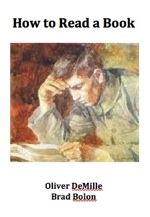
From the Introduction:
For centuries, philosophers have
contemplated the meaning of Life. One convenient metaphor is that Life
is a school, a never-ending series of lessons in the art of being Human.
By this measure, all learning is worthwhile; the knowledge gained in
the school of "hard knocks" is just as valuable as that gained from
brick-and-mortar institutions.
Of course, we can avoid the "knocks" for
ourselves by choosing to discover the truths revealed in the trials of
others. The core of such self-education is a good dose of classics.
However, even a constant
diet of Great Books is useless if we do not study in a way that helps us
to properly digest their Ideas!
Readers may be divided into four classes:
- Sponges, who absorb all that they read and return it in nearly the same state, only a little dirtied.
- Sand-glasses, who retain nothing and are content to get through a book for the sake of getting through the time.
- Strain-bags, who retain merely the dregs of what they read.
- Mogul diamonds, equally rare and valuable, who profit by what they read, and enable others to profit by it also.
~Samuel Taylor Coleridge
Product Description
33-page pdf download, graphics-rich,
viewable on computer or other pdf-enabled viewer. (For nook or Kindle,
consult your product manual or customer service for optimal viewing of
pdf files)
|
|
|
Getting Started
|
|
|
|
by Rachel DeMille
You know, some people hear the principles of Leadership Education (TJEd "tee-jay-ed") articulated just once and think, "Right! That makes perfect sense!"
They are ready to just go for it.
If
this describes you, getting started is pretty simple: Make a list of
your personal classics, and pick one.
You know, the one you've been
waiting for just the right time to read?
Give yourself permission to
make your own education a priority, carry that book around with you, and
get through it--or should I say, get it through you.
CONNECT WITH US
Oliver DeMille:
Rachel DeMille:
TJEd:
When you click here to shop for the resources you need, you get the great amazon prices and service, and amazon shares a portion of their revenue with TJEd.
Thanks for your support!
| |